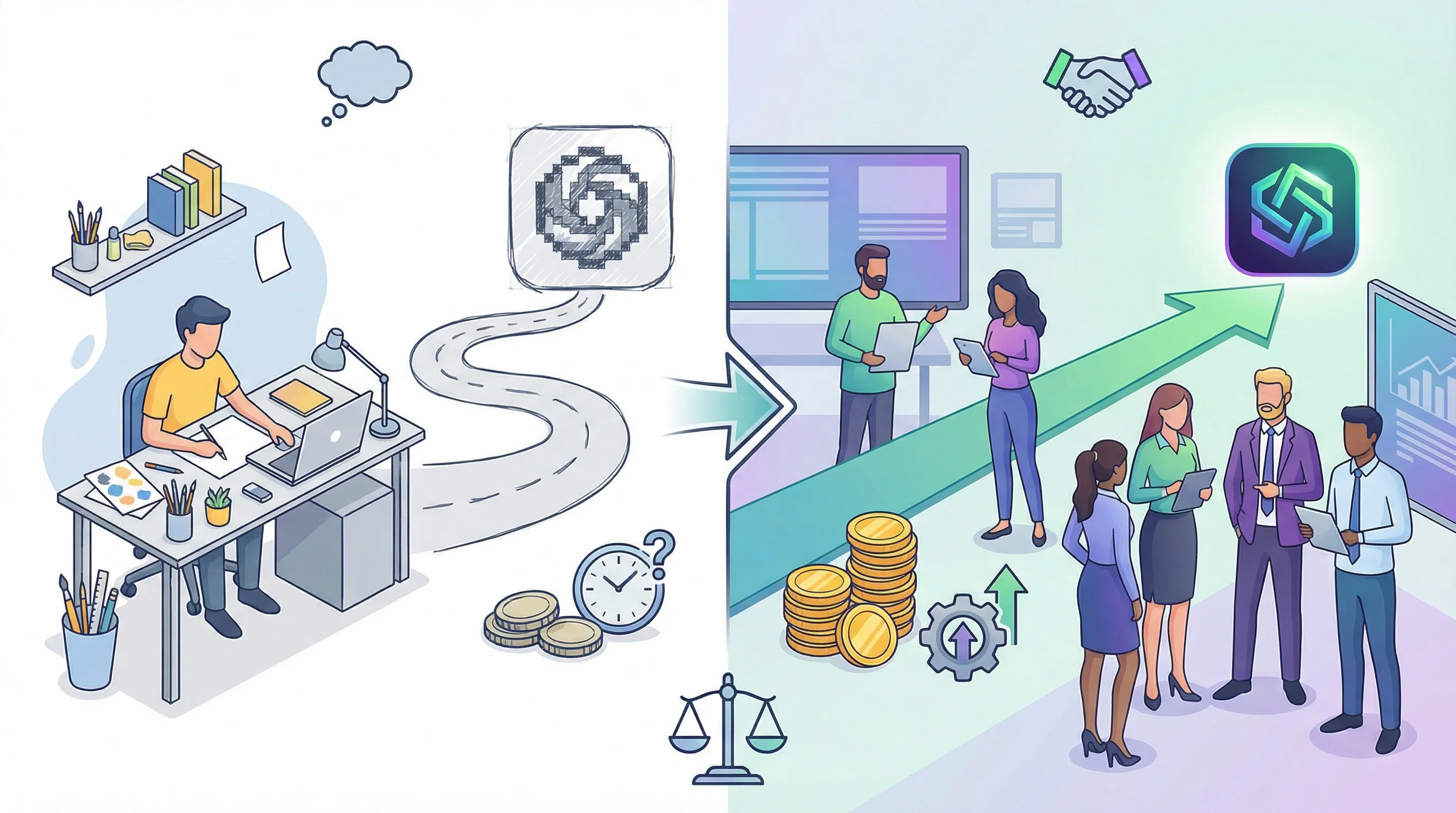
Most small business owners benefit from building both a personal brand and a company brand. Your personal brand builds trust and attracts opportunities as an individual. Your company brand builds equity that can scale beyond you. The right balance depends on your business model, exit plans, and personal preferences.
Here’s a tension every founder faces:
Do I build the business brand? Or build my personal brand?
The guru advice is confusing. Some say personal brand is everything. Others say you should stay invisible and let the business shine.
Here’s the nuanced reality: both approaches have merit. The right answer depends on your situation.
What’s the Difference?
Personal brand:
- Your name, your face, your reputation
- “Ben Macdonald” not “T40”
- You are the product/service
- Attached to you forever
Company brand:
- Business name, business identity
- Exists independently of any individual
- Can have multiple faces
- Potentially transferable (exit potential)
Founder-led company brand (the middle ground):
- Company has its own brand identity
- Founder is visible as the face of the company
- Both exist and reinforce each other
- Most SMEs land here naturally
Arguments for Personal Brand Focus
1. People buy from people
Especially in services and expertise businesses. Clients want to know who they’re working with. A human face builds connection faster than a logo.
2. Portability
Your personal brand moves with you. If you start a new venture, your reputation follows. Company brands stay behind.
3. Trust accelerator
People trust people more than corporations. An authentic personal presence breaks down barriers that company marketing can’t.
4. Content advantage
Personal stories, opinions, and perspectives perform better than corporate content. LinkedIn rewards individuals over company pages.
5. Network effects
Personal relationships compound. Your network becomes an asset. Those relationships are yours, not the company’s.
Arguments for Company Brand Focus
1. Scalability
A business built around you can’t scale beyond you. Company brand allows others to represent the business.
2. Exit potential
Buyers pay for brands that aren’t dependent on founders. If you want to sell someday, company brand matters more.
3. Team involvement
Company brand includes the whole team. Personal brand excludes them. Which culture do you want?
4. Longevity
Personal brands are fragile. Illness, burnout, controversy—anything affecting you affects the brand. Company brands are more resilient.
5. Professional perception
Some markets expect company presentation. B2B enterprise sales often requires institutional credibility that personal brands don’t convey.
Factors That Determine the Right Balance
Your business model
Personal brand priority:
- Coaching and consulting
- Speaking and thought leadership
- Creative professionals (designers, writers)
- Advisors and mentors
- Solo practitioners
Company brand priority:
- Agencies with multiple team members
- Product businesses
- Businesses you intend to franchise
- Anything you want to sell eventually
- B2B with enterprise clients
Your exit plans
Planning to exit within 5-10 years? Build company brand. Buyers want value that transfers.
Building a lifestyle business? Personal brand may serve you better. Optimise for your life, not theoretical exit.
Unsure? Build both moderately. Keep options open.
Your personality
Natural communicator, love visibility? Lean into personal brand. It’ll feel authentic.
Private, prefer to stay behind the scenes? Company brand lets you build without public exposure.
Somewhere in between? Most founders are. Blend approaches.
Your market
Serving individuals and small businesses? They want to know who you are. Personal connection matters.
Serving enterprises and institutions? They expect company presentation. Personal brand supports but doesn’t replace.
Serving creative industries? Expect personality. Bland corporate brands underperform.
The Practical Framework
For most SME founders, the answer is: build both, with clear roles.
Company brand provides:
- Visual identity and recognition
- Website and formal materials
- Team-inclusive presentation
- Asset that can scale
- Professional credibility
Personal brand provides:
- Human face and personality
- Social media presence
- Thought leadership content
- Network and relationships
- Trust acceleration
How they work together:
Your personal brand drives awareness and trust. Your company brand delivers credibility and scalability.
Example flow:
- Someone sees your LinkedIn post (personal brand)
- They visit your profile (personal brand)
- They click to your website (company brand)
- They read case studies (company brand)
- They book a call with you (personal brand)
- They hire your company (company brand)
Both contribute. Neither alone is sufficient.
Content Strategy for Both Brands
Personal LinkedIn/social:
- Your opinions and perspectives
- Personal stories and lessons
- Industry commentary
- Authentic vulnerability (appropriately)
- Network building
Company content:
- Educational resources
- Case studies and proof
- Service explanations
- Formal thought leadership
- SEO content
Cross-posting strategy:
- Share company content from personal account
- Feature team members on company channels
- Link between personal and company presence
- Use personal brand to amplify company content
Common Mistakes
Mistake 1: All personal, no company
“I don’t need a website. Everything’s on LinkedIn.”
What happens when you want to hire? When clients check references? When you need formal proposals?
Personal brand without company infrastructure limits growth.
Mistake 2: All company, no personal
“I’ll stay behind the scenes. The work speaks for itself.”
Work rarely speaks for itself. People choose between similar options based on who they’d rather work with.
Invisible founders lose to visible ones.
Mistake 3: Inconsistent messaging
Personal brand says one thing. Company brand says another. Customers are confused.
Align them. Same core messages, different expressions.
Mistake 4: Neglecting personal brand until too late
“I’ll build personal brand when the business is stable.”
Personal brand compounds over time. Starting late means years of catching up.
Begin early. Consistency beats intensity.
Mistake 5: Overdependence on personal brand
Every client wants you personally. You can’t delegate. You can’t scale. You can’t take holidays.
Build company capability alongside personal presence.
Building Both: A Practical Approach
Year 1-2 (Foundation):
- Build basic company brand (logo, website, core materials)
- Start personal presence (LinkedIn, maybe one other platform)
- Create content that can live on both
- Establish your core positioning and voice
Year 2-3 (Development):
- Strengthen company brand (case studies, refined identity)
- Grow personal following (consistent content, network building)
- Develop team members as additional voices
- Create thought leadership pillar content
Year 3+ (Maturity):
- Company brand can function without you front-and-centre
- Personal brand continues as accelerant
- Team members have their own presence
- Clear handoff paths for when appropriate
FAQs
Can my personal brand hurt my company?
Yes. Controversy, unprofessional content, or polarising opinions attached to you affect company perception. Be intentional about what you share.
Should employees build personal brands?
Encourage it. Team members with personal brands amplify company reach. Set basic guidelines but don’t over-control.
What if I’m not comfortable with visibility?
Start small. Written content before video. Industry topics before personal stories. Build confidence gradually. Not everyone needs to be an influencer.
How much time should I spend on personal brand?
Minimum: 2-3 hours weekly on LinkedIn/social presence. Moderate: 5-10 hours including content creation. Serious: 15+ hours making personal brand central to strategy.
Should I put my name in the company name?
Depends. “John Smith Consulting” is clear but limits scalability. Generic names (“Apex Consulting”) allow growth but lack personality. Hybrid approaches (“Smith & Partners”) balance both.
What to Do Next
- Audit current state — what exists for personal and company brand?
- Clarify your goals — exit plans, scale ambitions, personal preferences
- Define the balance — where should you focus given your situation?
- Create simple plan — what will you do weekly for each brand?
- Start consistently — small consistent actions beat sporadic intensity
Want to discuss brand architecture for your business? Let’s talk →
Related Articles: